Issue 14 · 19.05.26 · Festival Coverage
Roskilde 2026: Why we keep coming back
// Annelies Vollmuller · 4 min read
We've shot a lot of festivals by now, and Roskilde is one of those places that, every time, makes us slow down and look around. At a lot of festivals it's easy to just rush from stage to stage to photograph as many artists as possible. Roskilde is one of those rare ones where the walk between sets is part of the festival, and it's worth paying attention to.
I (Annelies) wanted to write a bit about why, because Roskilde is on this year from 27 June to 4 July. If you're someone who thinks about where your clothes come from, what's on your plate, and what kind of world your money is funding, this is the festival to put on your list.
It's a non-profit, and that changes everything
Roskilde Festival has been run as a non-profit since 1971. Every krone of surplus goes to a foundation that supports children, youth, humanitarian work, and cultural projects around the world. Over fifty-five million euros redistributed since the start. The roughly 30,000 people who run the festival on the ground, the volunteers behind every bar, gate, stage, and waste-sorting crew, are there because they want to be.
We mention it not because it's a brochure fact, but because once you know it, you feel it. The whole atmosphere is different when no one in the room is trying to extract a margin out of you.
The art changes the way you walk
Here's where it gets personal. Last year I stopped in front of a building, I didn't understand the five words across the front wall, in chunky white block lettering. It said VORES STÆMMER ER FRAMTIDS DRØMME. Our voices carry future dreams. If you read Danish you spot the misspellings straight away. STÆMMER should be STEMMER. FRAMTIDS should be FREMTIDS.
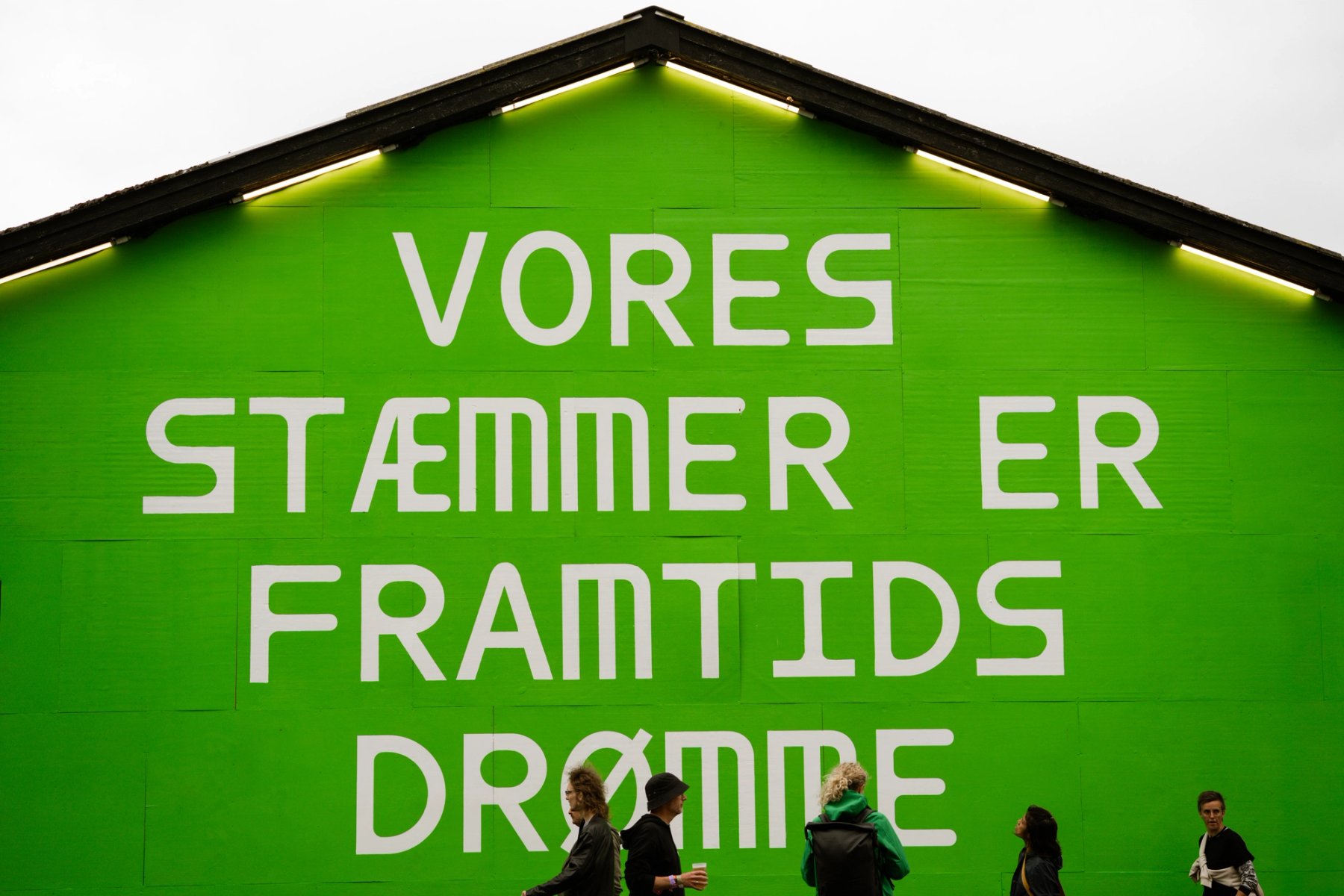
Honestly, I really liked it first because of the colour. That's what made me look. Then I read up on it and it got better. The artist is Julie Nymann. She's dyslexic. The whole installation is about pushing back on the way the Danish school system colour-codes dyslexic kids as "red," like a warning sign. Nymann painted the building green instead. Inside, the walls were covered in painted slogans: trænet i alternative løsninger, trained in alternative solutions. We try again, we don't give up. People were sitting at trestle tables eating lunch and reading the walls.
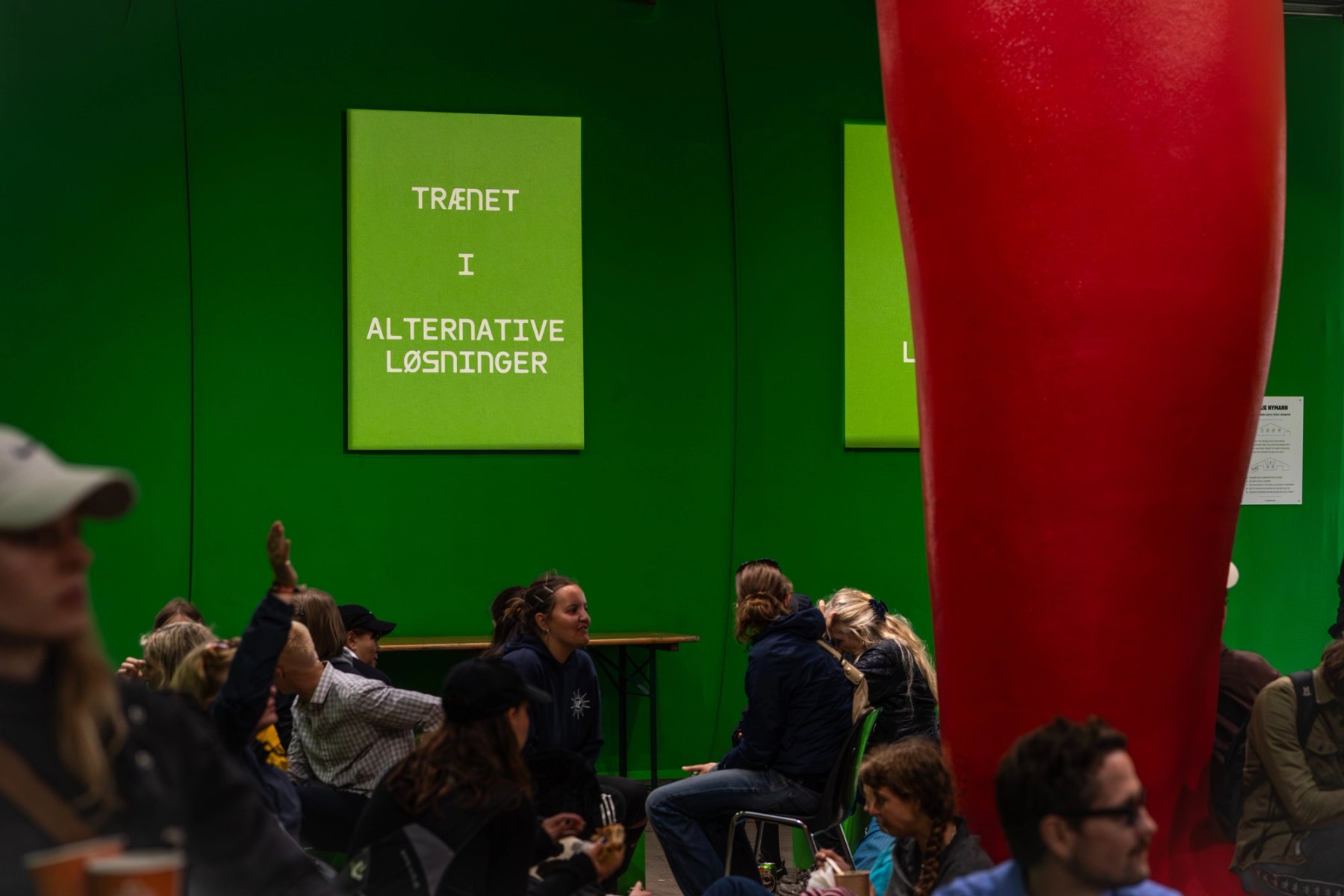
That's the Roskilde thing. You stop because something looks nice. Then you read it and end up thinking about it for the rest of the day.
A short walk from there, another piece that's stuck with us: a wall of secondhand clothing bales, plastic-wrapped, stacked three storeys high. PEACH, HAITI in handwritten Sharpie on the sides. That was Return to Sender by The Nest Collective from Nairobi. Fifty tons of the kind of clothes Europe and North America "donate" to charity and ship south. The piece follows what happens after the donation, and it's not what most of us grew up being told.
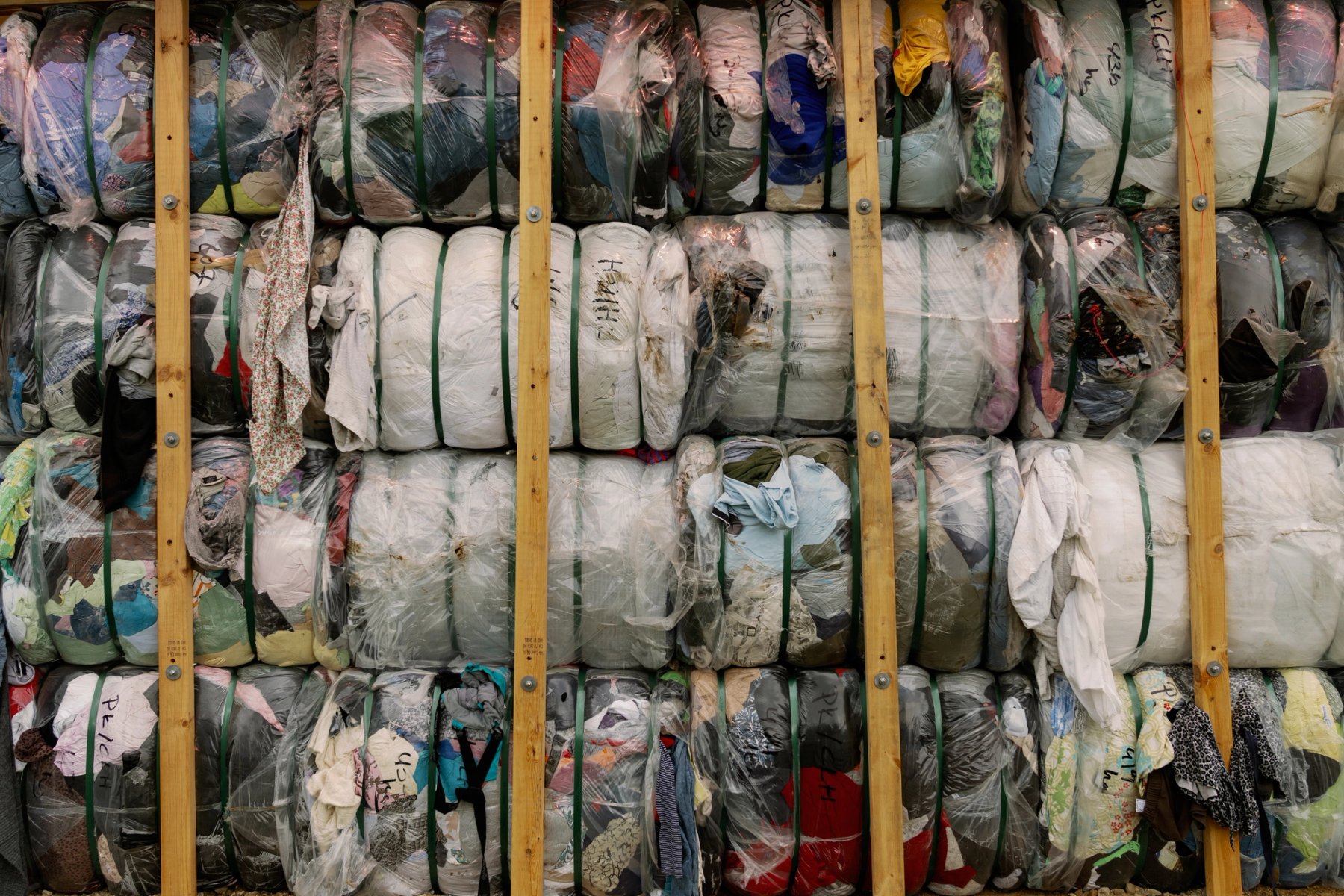
Those are just two examples from last year. Every year there are new ones. 2026 will have over 90 art and activism projects on site, from artists in more than 30 countries.
The green stuff is actually green
What we love about Roskilde's sustainability side is that it isn't a banner over the entrance, it's how the festival operates. There's a permanent on-site Circular Lab, run with the Tuborg Foundation, where young entrepreneurs test reuse, repair, and circular product ideas in front of a live audience. The festival has committed to being CO2e-neutral by 2028. The plant-based share of food on site grows every year. The waste-sorting operation is on a scale most cities can't match. On the sustainability page you can also see what's still in progress, not just what's already done. It makes the parts that are working feel a lot more real.
The week itself
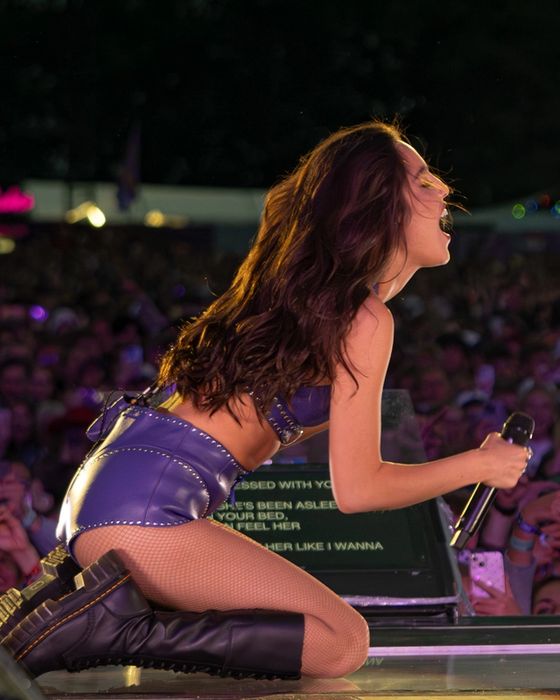
The 2026 lineup includes The Cure, Gorillaz, Ethel Cain, Zara Larsson, David Byrne, Jennie, Lily Allen, Little Simz, Wolf Alice, Kneecap, Sama' Abdulhadi, Ken Carson, and roughly 165 other artists from 37 countries. So yes, the music is there. But the music isn't the only reason to go.
If you're the kind of person who wants the festivals you go to to actually line up with the way you see the world, Roskilde might be the closest match in Europe right now. We'll be there shooting. Maybe see you in the field.
Roskilde Festival 2026 runs 27 June to 4 July, in Roskilde, Denmark.
From this story
The Front Row