Craft 03 · 01.12.25
Gear minimums for live music
// Colin Darbyshire · 6 min read
Most gear lists for music photography are wishlists in disguise. They are written by photographers explaining what they own. Not what you need to start.
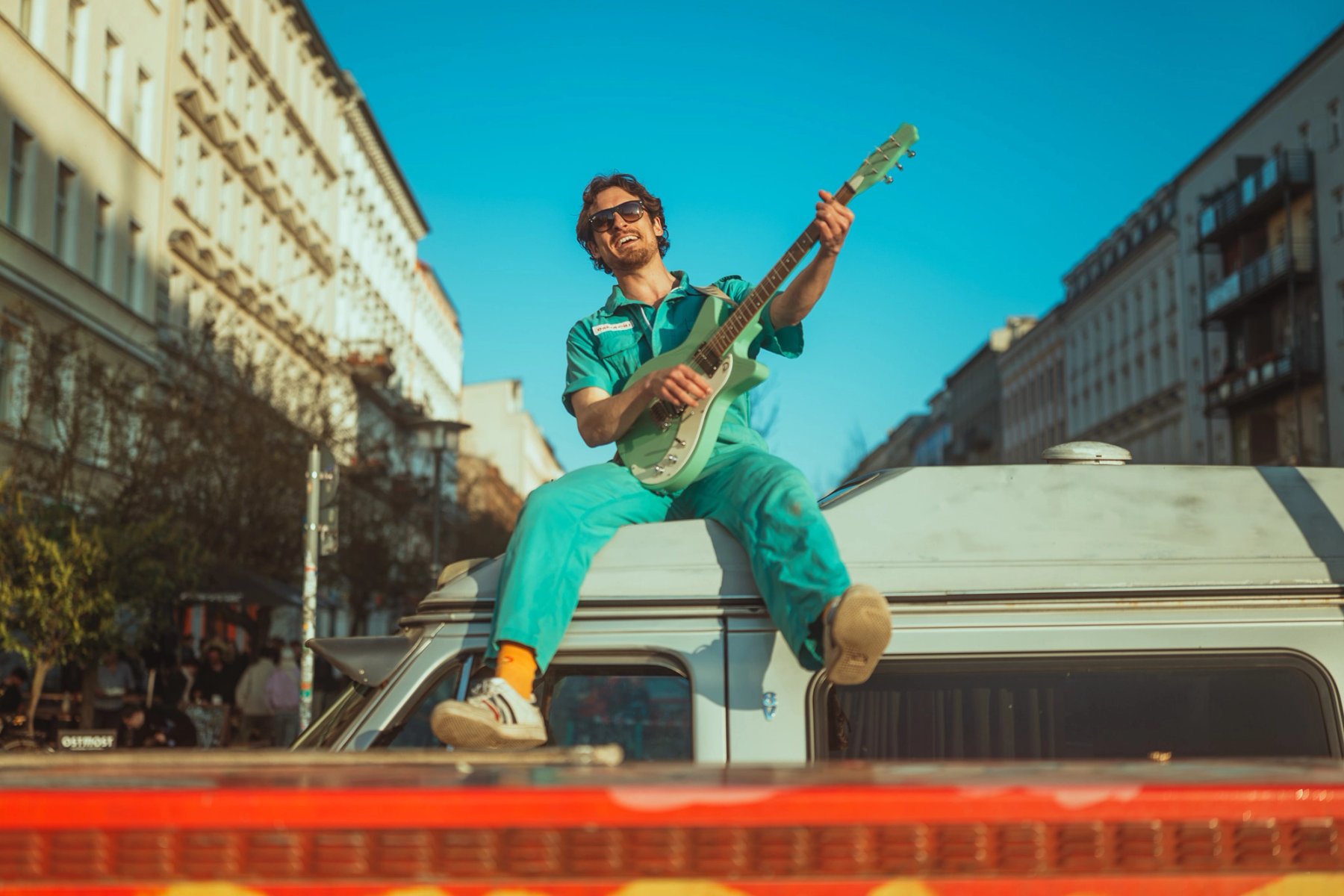
When we started Coda, we had two cameras and one particularly good lens . Our first try out were the amazing street musicians in a Berlin park. The kit doesn't matter as much as people pretend.
Here is what we carried at the beginning, what we bought later, and what we would buy if we were starting today.
How Coda actually started
There was no plan when we started. There were two cameras, neither of them matching. Colin had a Canon 90D he had bought a couple years before any of this. Annelies had a cheap entry-level Nikon she had picked up for a couple of hundred euros. The model is long forgotten now, which says everything about it. That was the kit between us. And we did not start in a pit. We started in Mauerpark, Berlin. And we still love to come back there. For all photographers that want to get into music, this is definitely a place for on your list!
Sundays in Mauerpark
Mauerpark is a public park in Prenzlauer Berg, Berlin. On Sundays it fills up with street musicians, and some of the best live musicians in the city play there. No accreditation. No PR. No barrier between you and them. You walk up, you listen, and if it feels right you raise the camera.
We went almost every weekend when the sun came out. Two cameras between us, a toasty or another snack from the market, no plan. We shot performers we are still collaborating with till this day. We learned how to read movement before the chorus. How to expose a face under hard sunlight or shifting cloud. How to ask permission with a nod and a smile, and how help each other out. The musicians knew their craft already. We learned ours alongside them. And as a thank you we send them the photos.
That is where Coda began. Not in a press pit. In a park, in front of musicians whose names we did not know yet.
If you are starting out and you cannot get accreditation yet, this is the answer. Find your Mauerpark. Every city has one.
The one lens that mattered
On the Canon, we ran the Canon EF 85mm f/1.4 L IS.
This was the lens that made the kit feel professional. Three things made it work for live music:
- →f/1.4 pulls in light a kit zoom cannot touch.
- →85mm on APS-C is roughly 136mm full-frame equivalent. Tight portraits with clean separation from the background.
- →Image stabilisation handles the slow shutter speeds you sometimes have to fall back on when the lighting drops.
Some of our favourite Coda frames came off that 85mm. The Freddie Gibbs shot at Metropol in 2022 was on it. Half the Sziget headliner frames from that first run, too.
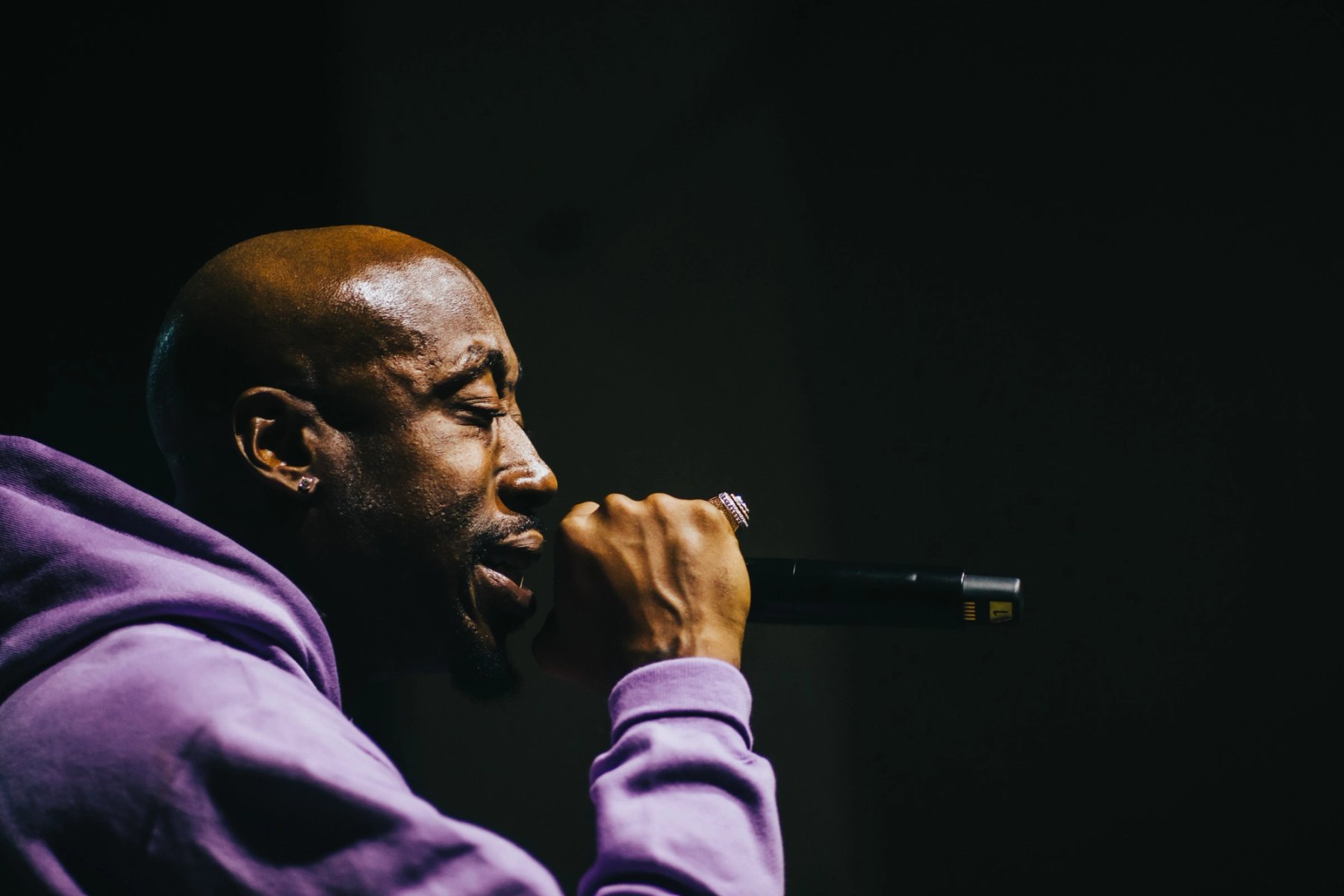
If you can afford one piece of glass before anything else, make it a fast 85mm prime. The catch: when an artist suddenly leans over the barrier into you, 85mm is too tight. You get a beautiful frame of an earring.
The Leica
We both run our own businesses on the side. Photography was a passion project. Quickly, it stopped feeling like one. We were shooting two or three shows a week, plus full festival days in summer. It was time for an upgrade. This was a second hand Leica SL2-S.
Full-frame. 24 megapixels. Designed for low light. Timing was deliberate: festival season was about to start.
The Leica earns its place in a dark room. In venues like Kantine am Berghain where the rig is minimal and the colour washes shift unpredictably, the SL2-S produces files that need less rescue in post. Dynamic range is generous. Skin tones are honest.
It also gave up on us a couple of times during festival season. Mid-set, no warning. That is a hard thing to write about an expensive camera, but it is the truth, and it is why we never travel without a second body now.
You have to be aware, the Leica is heavy! The lens system is its own commitment.
The Sony bodies, one festival season at a time
The next festival season after the Leica, we bought the Sony A7R V. 61 megapixels. Full-frame. Overkill for most pit work, but it gives us crop room. The same frame works as a square Instagram tile, a 16:9 magazine pickup, and a vertical poster.
A year after that, we bought a second-hand Sony A7 III (model code ILCE-7M3). The A7 III was released in 2018. The used market is full of them. We paid a fraction of the new price.
Why two Sony bodies and not just one bigger one?
- →Since we had some camera issues, we like to have two bodies. Especially to festivals when it is difficult to go to the store for reparation.
- →For lens swaps. You have a wide on one body, a tighter prime on the other. You switch shoulders instead of switching lenses.
- →The two-second window when you would otherwise be changing glass is exactly the window where the shot happens.
What would we buy now, starting from scratch?
If we were building a Coda starter kit today, on a budget half of what we have now, here is what we would buy:
1. One used full-frame body
A used camera, like the Sony A7 III. All sensible choices for concert photography. Pay attention to shutter count when buying used: under 50,000 actuations has plenty of life left. Aim for €1,000 to €1,500. Skip the latest release.
2. One fast prime lens
Somewhere between 35mm and 85mm full-frame equivalent. f/1.8 is acceptable. f/1.4 is better in deep low light, but f/1.8 is a third of the price for most mounts. Buy used.
3. Later: a second body and a longer lens
A 70-200mm f/2.8 is the workhorse lens for larger venues and festivals where the pit pushes you back from the stage. We learned that the hard way in the first year. Sigma versions perform really good and cost significantly less than first-party glass.
That is the kit. Everything else is opinion.
What you actually carry, beyond the camera
What matters more than which body brand you own:
- →Cards: enough fast SD or CFexpress that you never have to make a choice mid-set.
- →Batteries: enough that you never have to leave the pit.
- →A clean lens cloth in your pocket.
- →A hard drive backup workflow that runs without thinking.
- →And one of the most important ones, earplugs!
The kit is not the work
Every photographer remembers the first body they shot with. Almost nobody remembers the camera in a great frame.
Colin's 90D and Annelies's cheap Nikon got us into rooms we did not yet deserve to be in. Before that, they got us into Mauerpark, which mattered more. They were good enough. Good enough is the start. Everything after is choice, taste, and the work itself.
The Front Row